
Contact center buyers are migrating from on-premises to cloud-based CCaaS solutions, at all levels of scale, and digital and self-service complexity. This research will help customer service and support technology leaders find the best-fit providers for their needs.
por Drew Kraus
Market Definition/Description
Please note: Gartner has made several changes to the scoring criteria for the 2024 publication relative to the 2023 Magic Quadrant for Contact Center as a Service. Therefore, please do not evaluate year-over-year changes or make comparisons to the previous version of the Magic Quadrant for this market.
Gartner defines contact center as a service (CCaaS) as solutions offering SaaS-based applications that enable customer service departments to manage multichannel customer interactions holistically from both a customer-experience and employee-experience perspective.
CCaaS is a key technology platform used to support the customer service experience, whether it be self-service or assisted by customer service representatives. All organizations need to offer customer assistance. The preference is for remote support via voice and digital channels over physical presence in offices and stores, though it is common for organizations to offer multiple options.
The ambition is for customers to self-serve assistance, through web portals or chatbots. But it is also recognized that complex issues still need the support of employees. CCaaS technology is instrumental in orchestrating both self- and assisted-service engagement with customers. The technology can also manage the quality of engagement between the customer and the customer service representative, recognizing that premium customer experiences are achieved through premium employee experiences.
Mandatory Features
While CCaaS solutions can support a variety of customer interaction channels, to be considered “CCaaS” the solutions must be anchored in inbound voice routing/automatic call distribution (ACD). CCaaS solutions must also support:
- Application and native communication connectivity, providing voice and data access (telco “points of presence”) as well as application hosting on public and/or private data centers to support client access, including in markets where the provider supports connectivity but does not actively market and sell its services.
- The routing of digital interactions (including email, web chat, SMS, social media, video or other channels).
- Prepackaged agent, supervisor and reporting applications, although these environments may be extended using a GUI-based interface or open APIs.
- Workforce engagement management (WEM) that covers some or all of agent staff scheduling and forecasting, call and/or desktop recording and analytics, quality management, agent assistant functionality, knowledge management, and workflow routing of noninteraction work items.
Gartner’s definition of CCaaS excludes:
- Hosted contact center services, in which system hardware and software are dedicated to individual customers.
- Managed services, in which hardware and software are dedicated to a particular customer and run on that customer’s premises or in a third-party data center, but are managed by a third-party service provider.
- Enterprise server software repurposed as CCaaS offerings.
Common Features
Other common CCaaS capabilities may include:
- Outbound voice (predictive, progressive or preview dialing)
- Customer self-service automation (interactive voice response [IVR]/voice portal, self-service bots, virtual customer assistants)
- Integration with customer tracking (CRM) and other enterprise databases
- Real-time and historical tracking and analytics
Magic Quadrant
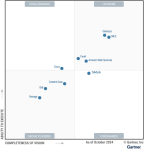
Figure 1: Magic Quadrant for Contact Center as a Service

Vendor Strengths and Cautions
8×8
8×8 is a Niche Player in this Magic Quadrant. Its 8×8 Contact Center is delivered via the 8×8 Platform, which integrates CCaaS, UCaaS and CPaaS. 8×8 Contact Center is part of the X Series licensing suite, which includes CCaaS and UCaaS communications as a bundled offering. It is also offered as a stand-alone solution. 8×8’s global footprint includes midsize businesses and enterprises seeking a single platform for CCaaS and UCaaS, and a Microsoft Teams-integrated contact center. It also serves large enterprises that do not require advanced functionality for complex deployments.
Recent improvements to 8×8 Contact Center include expanded third-party bot integrations and enhanced channel integration with MS Teams.Strengths
- Focus on midmarket: 8×8 Contact Center is well-suited for the midmarket segment, offering a comprehensive “good enough” feature set composed of CCaaS, UCaaS and CPaaS in a single platform. It also offers ease of implementation and strong value for price, aligning well with purchasing requirements.
- Microsoft Teams integration: 8×8’s natively developed 8×8 Voice for Microsoft Teams leverages the Microsoft Operator Connect integration. This integration enables better quality connection to Microsoft Teams than other integration methods by enabling a direct peering connection over a common Microsoft Azure instance.
- Data aggregation: 8×8’s data aggregation across multiple customer information sources enables strong contact routing and analytics capabilities for midsize organizations that may otherwise lack such capabilities.
Cautions
- Challenging fit for complex environments: 8×8’s feature set best fits midsize contact centers with fewer than 300 agents. Prospective customers with large and more complex customer service requirements should confirm that it meets the needs of their customer services business unit.
- Varying contact center skill among channel partners: A number of 8×8’s channel partners lack strong CCaaS expertise, which can add risk and increase implementation times. Prospective buyers must validate the skill of the channel partner, in addition to determining the functionality fit of the solution.
- Reporting granularity and flexibility: In both Gartner client inquiry calls and Peer Insights reviews, some customers indicated that 8×8’s reporting capabilities lack the granularity and flexibility that they would expect of a large customer service organization.
Amazon Web Services
Amazon Web Services (AWS) is a Leader in this Magic Quadrant. Amazon Connect draws on the broad infrastructure and software capabilities of AWS. It is sold both directly and through an expanding set of large channel partners, including global systems integrators (GSIs) and Salesforce, to businesses of all sizes, from startups to global enterprises. Amazon Connect is especially popular among those that use AWS as part of their cloud, data and AI strategy. Its scalability and ability to support high levels of customization enable it to fit even the largest contact center environments.
Recent enhancements to Amazon Connect include built-in generative AI (GenAI) capabilities for IVR and self-service, and agent and supervisor assistance (for example, Amazon Q in Connect, Amazon Connect Contact Lens).Strengths
- Customizable solutions: In addition to supporting some preconfigured contact center functionality, Amazon Connect offers organizations the ability to develop and build their own customized solutions for customer service, either with in-house developer skills or through a network of development partners that can deliver turnkey solutions using the platform.
- Agile for experimentation: Amazon Connect enables organizations to experiment with a variety of capabilities including AI, GenAI, voice, chat and self-service at a low cost without long-term commitments. Its consumption-based pricing approach means clients don’t have to pay for unused capability or seats.
- Ability to scale: AWS draws on the global reach of its cloud infrastructure, AI investments, and consulting and resale partners to deliver global solutions with very high levels of availability. Its ability to scale helps meet the needs of some of the largest contact center environments.
Cautions
- Technical skills may be required: Organizations seeking to extend or customize Amazon Connect beyond its native out-of-the-box capabilities might need developers trained on AWS development tools, AWS’ professional services, or a certified partner to develop and maintain customizations. Prospective buyers should consider any additional costs that this may add to deployment.
- Reporting granularity and flexibility: Gartner client inquiry and Peer Insights reviews indicate that Amazon Connect presents challenges for some clients with reporting, analytics and dashboard data. Some note reporting capabilities within the UI lack the granularity and flexibility they require; others that they must export data to third-party analytics tools for improved data visualization.
- Cost variability and pricing complexity: Amazon Connect’s consumption-based pricing requires organizations to evaluate and forecast contact volumes to ensure they can predict ownership costs across the solution’s pay-as-you-go features. This pricing model can make it challenging to compare with pricing from other vendors that use alternative pricing models.
Cisco
Cisco is a Challenger in this Magic Quadrant. Its Webex Contact Center is a CCaaS platform offered to customers through indirect channel partners. It can be implemented and supported either through channel partners or services provided directly by Cisco. Gartner finds that the solution is gaining the most traction with midsize contact centers. Webex Contact Center is especially sought by those organizations consolidating multiple Cisco Unified Contact Center Express on-premises systems. It is also sold to larger contact centers and into environments new to Cisco contact center technology.
Webex Contact Center was launched in 2020 and is now available globally. Improvements made to it in the past year include enhanced Microsoft Teams integration and enhancements to AI-driven customer and agent assistants.Strengths
- UCaaS and CPaaS integration: Webex Contact Center can be deployed with tight integration to Cisco’s collaboration portfolio (UCaaS) and Webex Connect (CPaaS). It also stands out for its Microsoft Teams integration.
- Support services: Cisco’s long-established presence in the contact center market enables it to provide global support for clients, either directly or through channel partners.
- Agent well-being management: Cisco’s “Agent Wellness” capability provides an innovative approach to managing agent well-being by monitoring potentially stressful interactions and providing proactive suggestions to manage postinteraction stress levels.
Cautions
- Multiple admin interfaces: Webex Contact Center may require the use of multiple administrative interfaces for different components, despite being bundled under the Webex Control Hub system management environment.
- Weak SLA credits: Webex Contact Center’s standard service agreement is relatively weak in the market, specifically its compensation system for missed system uptime SLAs. Prospective buyers should assess comparative SLAs and prepare to negotiate for more stringent service-level targets and more generous credits for underperformance.
- Few third-party integrations: Webex Contact Center’s applications marketplace program offers few third-party technology integrations to enhance the customer’s overall solution. Prospective buyers seeking to enhance the system’s base functionality must determine whether the partner options available will meet their needs.
Content Guru
Content Guru is a Niche Player in this Magic Quadrant. Its storm CONTACT is a specialized CCaaS platform offered to customers through direct and indirect channels. It focuses on large organizations with deep integration and customization needs, particularly multinational organizations with headquarters in the U.K. and Europe. Content Guru supports a number of customers with more than 10,000 agents and offers a deployment option for those requiring an availability service-level target of 100%. The company also offers storm LITE for small and midsize businesses.
In the past year, Content Guru has added functionality to its offerings, such as Internet of Things (IoT) device support, as well as enhancements to AI-driven customer and agent assistants.Strengths
- Large, complex deployments: Content Guru has extensive experience providing support for the customer service needs of large and complex deployments. Organizations with such deployments should consider its experience in this area as an advantage.
- High service availability: Content Guru has strong references for environments with stringent system resiliency requirements, including those providing emergency medical services that require an availability service-level target of 100%.
- User experience and customer support: Content Guru has received praise for its ease of use as a solution and its strong customer support. Customers offer high marks for both in Gartner client inquiries and Peer Insights reviews.
Cautions
- Weak SLA credit program: Unlike other vendors in this research, Content Guru does not publish a standard service agreement or information about credits for missing availability service-level targets. Prospective buyers should assess comparative SLAs and prepare to negotiate for meaningful terms.
- Complex pricing: Content Guru’s pricing model can make it difficult for customers to understand the solution’s total cost of ownership. This is due to the multitude of “a la carte” licensing components and their charges, which can add to ownership costs.
- Support outside Europe: Most of Content Guru’s operations are located in Europe. Support in other regions is limited, a shortcoming that may require customers to invest more in managing their relationship with the vendor. Prospective buyers outside of Europe should consider the implications of limited support.
Five9
Five9 is a Leader in this Magic Quadrant. Its Intelligent CX Platform is offered to enterprises through dedicated sales and support teams and through systems integrators and other channel partnerships. Five9’s execution favors organizations of all sizes in the U.S., including U.S.-based multinational organizations, with increasing capability to support organizations in other geographic regions. The company supports a number of customers with more than 10,000 agents.
In the past year, Five9 introduced an environment for developing, testing and deploying AI-enabled services. It also acquired Aceyus for multivendor reporting and analytics, further enhancing its toolset for migrating customers from legacy on-premises contact center infrastructure.Strengths
- Services and ease of use: Five9 technical account managers are widely praised by customers for their strong support after the sale and how they help customers derive value. Customers also give the solution high marks for ease of use in Peer Insights reviews.
- Broadened market fit: Five9 is increasing its solution delivery capability beyond its focus historically on midsize contact centers, expanding deployment of its platform in environments with hundreds or thousands of agents, including those with complex deployment requirements.
- On-premises system migration: Five9 provides strong programs and tools for migrating customers from on-premises systems.
Cautions
- U.S.-centric operation: Five9 remains primarily a U.S.-centric CCaaS provider, despite its international growth. Prospective buyers who are not U.S.-based may find that service and support requires greater internal investment or assistance from certified partners to manage the supplier relationship.
- Weak SLA credits: Five9’s standard service agreement is relatively weak in the market when it comes to its compensation for missed system uptime SLAs. Prospective buyers should assess comparative SLAs and prepare to negotiate more meaningful credits for system downtime.
- System challenges: Some Five9 customers report challenges with the system administrative user interface (UI), extent of languages supported in the UI and the solution’s reporting capabilities. Prospective customers should evaluate whether recent updates to these capabilities meet their needs.
Genesys
Genesys is a Leader in this Magic Quadrant. Genesys Cloud CX is a specialized CCaaS platform offered to organizations through a mix of direct sales and channel partner relationships, which vary among regions. Genesys Cloud CX can be a fit for organizations of all sizes and geographic requirements, particularly those valuing customer journey analytics, AI and automation. Genesys has successfully leveraged its experience in global sales, marketing and operations of on-premises contact center solutions to sell and support Genesys Cloud CX.
In the past year, Genesys has added functionality to its offering, such as enhanced social channel engagement, thanks to its acquisition of Radarr. It has also made enhancements to AI-driven customer and agent assistants.Strengths
- Large, complex deployments: Genesys has extensive experience providing support for the customer service needs of large, complex, multinational deployments, and supports a wide variety of languages in its agent and admin UIs. Organizations with such deployments should consider Genesys’ experience in this area as an advantage.
- Easy on-premises-to-cloud migration: Genesys’ solution includes strong tools and processes to migrate customers either from its other offerings or from competitors’ on-premises-based platforms to Genesys Cloud CX.
- Customizable solutions: Genesys is known for its system’s ease of use and customizability, and the frequent release of new capabilities. Customers give the company high marks in these areas in both Gartner client inquiries and Peer Insights reviews.
Cautions
- Reporting, analytics and workforce management (WFM): Genesys Cloud CX lacks full-featured support for reporting and analytics, digital functionality and WFM. Some customers have reported challenges with these aspects of the platform, while some find that they need to work with Genesys AppFoundry partners or Genesys Expert Apps to overcome these challenges.
- Remote customer support: Some Genesys Cloud CX customers, in both Gartner client inquiry and Peer Insights reviews, continue to report frustration with the lack of responsiveness and product familiarity of the company’s support staff.
- Limited vertical market offerings: Genesys Cloud CX lacks the breadth of productized vertical market offerings that are available from some competing providers in the market. Customers may require additional customization or work with Genesys AppFoundry partners to integrate into some deployment environments.
NICE
NICE is a Leader in this Magic Quadrant. CXone, its specialized CCaaS platform, is offered both directly and through a channel program that features international partners. NICE CXone appeals to organizations of all sizes and geographic locations that are seeking a strong vision for customer service analytics, workforce engagement management (WEM), AI and automation. The company leverages its history as a market-leading provider of enterprise-scale WEM solutions to establish customer trust in its ability to support large and complex CCaaS deployments.
In the past year, NICE has added functionality to its offering that includes multichannel forecasting, native UCaaS functionality, enhanced outbound capabilities, and enhancements to AI-driven customer and agent assistants.Strengths
- Large, global account support: NICE has earned a reputation for its ability to support large, global accounts. Organizations with such deployments should consider its experience in this area as an advantage.
- AI and analytics: NICE’s strong AI and analytics capabilities draw on the company’s vast amounts of labeled data about customer intents and actions. These capabilities leverage data from WEM interactions that are captured and embedded across CXone, allowing NICE to build and refine self-learning customer interaction models.
- Ease of use: CXone offers a simple UI and administrative environment, as well as strong technical account manager support. Customers praise the product for these characteristics in both Gartner client inquiries and Peer Insights reviews.
Cautions
- Reporting data: In both Gartner client inquiry and Peer Insights reviews, some NICE customers indicate frustration with CXone’s lack of detail in its native reporting data.
- Midsize customers’ support challenges: Some of NICE’s midsize customers have faced challenges with support services, as indicated in both Gartner client inquiry and Peer Insights reviews.
- Legacy WEM integration: Some of NICE’s optional legacy WEM capabilities aren’t integrated into the platform. In some cases, these capabilities require additional resources to manage. Prospective buyers should ensure they understand the service proposition differences between NICE’s various product offerings.
Talkdesk
Talkdesk is a Visionary in this Magic Quadrant. Talkdesk CX Cloud, its specialized CCaaS platform, is offered both directly and through channel partners. The platform offers tight integration across a breadth of functionally rich, natively built contact center capabilities. It also offers basic UCaaS functionality. With a distributed geographic footprint, Talkdesk presents a strong service proposition for multiregion organizations headquartered in North America or Europe.
Over the past year, Talkdesk has introduced enhancements to its CX Cloud functionality, such as AI-enabled intent detection and routing, and integration with third-party contact centers, as well as enhancements to AI-driven customer and agent assistants.Strengths
- Account managers and ease of use: In both Gartner client inquiry and Peer Insights reviews, customers report satisfaction with the responsiveness and consultative support from Talkdesk’s technical account managers and customer success managers, in addition to ease of use and customizability of the system.
- Vertical market capabilities: Talkdesk offers prepackaged industry-specific products for key vertical markets, including banking, insurance, healthcare (payers and providers) and retail. These provide deep integration with core systems, applications and workflows at the industry level.
- Expanding market: Talkdesk, which historically sold primarily to midsize contact centers, is increasingly deploying its platform in contact centers with hundreds or thousands of agents.
Cautions
- Tech support and reporting: The company continues to struggle with system reporting capabilities and its support organization. Customers report frustrations with these aspects of the Talkdesk solution in both Gartner client inquiries and Peer Insights reviews.
- Limited geographic focus: Talkdesk’s emphasis on the North American and European markets raises questions about its ability to effectively serve clients in other areas. Prospective buyers should verify that the company can meet their geographic requirements.
- Third-party tech partners: Some customers report finding Talkdesk less willing to partner with third-party technology providers to enhance their solution than other vendors in this market. This reluctance can add to custom development costs and deployment timelines when customers are encouraged to build certain capabilities, rather than integrate prepackaged offerings from third-party vendors.
Vonage
Vonage is a Niche Player in this Magic Quadrant. Vonage Contact Center (VCC) is part of a broad “programmable communications platform” strategy incorporating UCaaS, CCaaS, conversational commerce and CPaaS capabilities. Vonage’s solutions are sold through a combination of direct sales and channel partner relationships, and have good market adoption among contact centers averaging fewer than 300 agents, although the system can scale much larger.
Vonage, now operating as a wholly owned subsidiary of Ericsson but under the Vonage brand, has added several capabilities to VCC in pursuit of its vision to meet a broad spectrum of customers’ communication requirements beyond customer service needs. Recent enhancements to VCC capabilities include improved integrations, agent UI and analytics.Strengths
- Tight UCaaS and CPaaS integrations: VCC can be deployed with tight integration to Vonage’s collaboration portfolio (UCaaS) and API toolkit (CPaaS). It also supports integration to Microsoft Teams.
- Salesforce Service Cloud interface: VCC has strong integrations with the user and administration interface for Salesforce Service Cloud. Customers consistently give it high ratings on Salesforce AppExchange.
- Optimized capabilities for midmarket: A high percentage of Vonage’s business is in midmarket. As such, its go-to-market capabilities in both direct sales and through channel partners are optimized for success at the midmarket range. Customers also find VCC’s simple administrative interface to be a good fit for lower-complexity deployments.
Cautions
- Limited multilingual UI support: VCC’s system admin interface is English-only, and the company offers limited language support for agent interface. Global organizations may need to invest resources in managing multilingual operations if they choose Vonage.
- System reporting challenges: Gartner clients have reported challenges with VCC’s native system reporting, as well as the company’s technical support services. Prospective buyers with limited expertise in creating custom reporting solutions for CCaaS should consider the implications of these potential challenges.
- Reliance on CRM partners: Vonage’s programmable communications platform approach relies on its CRM partners to deliver many innovative capabilities. Dependency on third parties may increase solution complexity and cost.
Vendors Added and Dropped
We review and adjust our inclusion criteria for Magic Quadrants as markets change. As a result of these adjustments, the mix of vendors in any Magic Quadrant may change over time. A vendor’s appearance in a Magic Quadrant one year and not the next does not necessarily indicate that we have changed our opinion of that vendor. It may be a reflection of a change in the market and, therefore, changed evaluation criteria, or of a change of focus by that vendor.
Added
No vendors were added to this Magic Quadrant.
Dropped
No vendors were dropped from this Magic Quadrant.
Inclusion and Exclusion Criteria
To qualify for inclusion in this Magic Quadrant, providers need to fulfill all of the following requirements:
- A minimum of $72 million total revenue as of 31 December 2023, composed of concurrent licenses, named user licenses and application consumption. This revenue stream is restricted to enterprise customers and does not include business process outsourcing (BPO) or contact center outsourcing business. We require a letter of attestation from an appropriate finance executive certifying that the minimum revenue requirements are met.
- Demonstrated sales, marketing and operational (including company registration) presence in three of the following geographic regions:
- North America
- Europe
- South America (including Central America)
- Asia/Pacific
- Middle East and Africa
- Services should primarily be offered on multitenant platforms and on multiple instances of microservices software as required to meet the needs of customers across several geographies. (Multitenant software describes how the service provider operates a single software instance on which multiple customers can be supported.) To be included in this Magic Quadrant, vendors need to show how their CCaaS platform is designed to support organizations with customer service teams from 25 users up to many thousands of users. The platform must also be able to support both voice and nonvoice channels. This must be evidenced in the vendor’s strategic intent for the CCaaS platform, contract reviews evaluated by Gartner analysts and analysis of company size in Gartner Peer Insights and Gartner Digital Markets platforms. CCaaS providers need to demonstrate how, irrespective of architecture employed, their software inherently provides all customers with transparent access to the same set of services irrespective of location. Software updates must be simultaneously “pushed” to all customers regardless of location, avoiding the traditional “major upgrade” cycles typical of on-premises or single-tenant hosted/managed deployments.
- Contact center seat license ownership must be retained by the service provider. Customer contracts must allow for elasticity of usage (enabling customers to scale agent licenses or consumption up or down as usage demands change).
- At least 50% of CCaaS service revenue must be from inbound voice agent licenses (automatic call distribution [ACD]). Other licenses may include outbound voice (predictive, progressive or preview dialing) and must include routing of digital interactions (including email, web chat, SMS, social media, video or other channels). They may also include IVR/voice portal, WEM, call and/or desktop recording and analytics, knowledge management, workflow routing of noninteraction work items, integration with customer tracking (CRM) and other enterprise databases, and real-time and historical tracking and analytics. The service must provide prepackaged agent, supervisor and reporting applications, although these environments may be extended using a GUI-based interface or open APIs.
- A CCaaS provider must rank among the top providers in the market momentum index defined by Gartner for this research. Data inputs used to calculate relevancy include Gartner client interest, customer reviews, and market awareness.
Gartner’s definition of CCaaS excludes:
- Hosted contact center services, in which system hardware and software are dedicated to individual customers.
- Managed services, in which hardware and software are dedicated to a particular customer and run on that customer’s premises or in a third-party data center, but are managed by a third-party service provider.
- Enterprise server software repurposed as CCaaS offerings.
Evaluation Criteria
Ability to Execute
Product or Service: The product platform should include the ability to offer (on a consumption basis) all contact center services expected in a suite platform (for example, IVR and speech, inbound and outbound multichannel contact routing, WEM and analytics). This should include a self-service capability to implement, manage, revise and report on operational performance.
Overall Viability: A number of cloud service providers have yet to achieve profitability as rapid growth and business expansion plans require investment in technology, people and infrastructure to achieve the business growth plans. Many CCaaS providers are private or a business unit of a larger company so don’t report a detailed balance sheet to examine financial viability. Revenue indications and growth are important factors here as are the overall business strategy for success, which are more readily available to be assessed.
Sales Execution/Pricing: The market for CCaaS has yet to reach saturation, so there are plenty of opportunities for continued growth. We expect suppliers to be able to demonstrate better than 20% annual growth year on year, with a good selection of references from large or well-known organizations. Cloud services are, by definition, elastic and licensing terms should reflect this, enabling a customer to scale up and down in line with business requirements. While minimum commitments to licenses are to be expected, customers should have the flexibility to vary consumption. Usage based licensing (per minute/ per transaction) are useful additions emerging in some providers.
Market Responsiveness/Record: With a number of new entrants to the CCaaS market taking market share, being an established player is not a major advantage in terms of securing new business.
Marketing Execution: CCaaS providers with strong brand awareness tend to be invited to tender for more opportunities than those without strong brand awareness. This helps them win more business. A comprehensive marketing program is important to attract invitations to bid for opportunities. Brand awareness is also key to developing channels with systems integrators, where they are less likely to go to market with providers that their customers are unaware of.
Customer Experience: Developing a reputation for consistently delivering reliable services and delivering a differentiated customer experience can help suppliers maintain and grow a CCaaS business ahead of the competition. This is especially important as customers commit to a strategic CCaaS provider for multiple regions but still expect to be supported in a timely fashion by a local support organization.
Operations: Contact centers provide critical front-office operations, and customers need to be confident their CCaaS will be supported by talented, experienced and motivated staff. As customers select strategic suppliers for multiregional needs, CCaaS operations will need to be localized.
Table 1: Ability to Execute Evaluation Criteria
Enlarge Table
| Product or Service | High |
| Overall Viability | High |
| Sales Execution/Pricing | High |
| Market Responsiveness/Record | Medium |
| Marketing Execution | Medium |
| Customer Experience | High |
| Operations | Medium |
Completeness of Vision
Market Understanding: Understanding the role that a cloud contact center plays in an organization’s customer service and broader customer experience strategy — and how it relates to other capabilities — is important for success. Market understanding includes anticipation of market consolidation, new competitors such as CRM players, and how to defend as well as grow relevance.
Marketing Strategy: Communicating a differentiated strategy in a market where technologies are largely similar is crucial to win mind share. Gartner clients are increasingly asking about using a single provider across multiple geographies, which should be reflected in CCaaS providers’ marketing strategy.
Sales Strategy: Striking the best balance between direct and indirect approaches to the market is important when the cost of sale can be very high and compensation impacts cash flow. As customers select a strategic provider for CCaaS, providers must balance customers’ desire to deal directly and centrally for contract terms, but be managed locally for regional needs. Managing internal conflict between local sales offices is key to developing strategic relationships with customers.
Offering (Product) Strategy: This criterion covers the vendor’s approach to product and service development and delivery that highlights industry requirements, and the speed at which differentiated or innovative services are added to the platform. Using communities to act on insight from customers to influence product development will be increasingly important as vendors scale.
Business Model: The relevance of the commercial model to how a vendor proposes to use a combination of direct sales and channel distribution to scale the availability of its service. Partners need recurring revenue too and the model by which they can profitably resell and support CCaaS customers will be key to the CCaaS provider’s success.
Vertical/Industry Strategy: A specific focus on industries or other segmentation, such as contact center size, is an opportunity to increase mind share in key target markets, in contrast to a horizontal, all-encompassing market vision. For CCaaS providers with lower marketing budgets and reduced overall mind share, the best opportunity to compete and win against the larger players exists in a differentiated vertical or industry strategy.
Innovation: The vision to see opportunities to differentiate services for customers, either through in-house development or collaboration with innovative partners. Providers should reflect the future of applications as APIs and marketplaces.
Geographic Strategy: The vendor’s strategy for growth outside its home market, in order to attract a larger audience, is key to meeting the contact center needs of global and multiregion organizations. CCaaS providers’ approach to this will be critical to profitable growth.
Table 2: Completeness of Vision Evaluation Criteria
| Evaluation Criteria | Weighting |
|---|---|
| Market Understanding | Medium |
| Marketing Strategy | Medium |
| Sales Strategy | High |
| Offering (Product) Strategy | High |
| Business Model | Medium |
| Vertical/Industry Strategy | Medium |
| Innovation | Medium |
| Geographic Strategy | High |
Quadrant Descriptions
Leaders
Leaders are best described as suppliers with strong support for a wide breadth of customer service capabilities, and an ability to serve multinational organizations with local sales and support organizations. Leaders are more likely to serve customers through channel partners and have strong brand recognition, which has resulted in a large installed base or above-average market growth as a result of customer demand. Leaders also benefit from being able to support varying levels of deployment complexity, including integrations with partners through established marketplaces.
Challengers
Challengers may have large installed bases of customers, but do not necessarily have the brand awareness or adoption level of Leaders. Challengers are often less mature than Leaders in their multiregional market approach, preferring to focus on strengths in a subset of markets. They may have recognized strengths in serving certain customer-size segments or specific vertical markets. But they are also likely to have less-developed product capabilities than Leaders, or to lack marketplace representation.
Visionaries
Visionaries have strong multichannel product and service capabilities and a clear strategy for sales, marketing and business development. They differentiate themselves by adding unique or innovative functionalities and/or delivery capabilities, which gives them some brand awareness in target markets. Visionaries tend to be smaller than Leaders and Challengers overall, and have more limited investment potential for international expansion.
Niche Players
Niche Players may be quite large or experiencing relatively strong growth, but have decided to focus on a particular market opportunity, a specific set of solutions or certain vertical markets. Their products and services may still be undergoing development, or they may rely heavily on partners to complete their service proposition. Niche Players are likely to be either new or relatively recent market entrants, or suppliers that have yet to build a large customer base.
Context
As CCaaS solutions continue to be sold to larger and more complex accounts, client organizations are increasingly consolidating their contact center platforms across multiple regions with a single provider. In this Magic Quadrant, we focus on the ability of providers to address the needs of global organizations by requiring evidence of demonstrable sales, market and operational presence in at least three regions, as defined in the Inclusion Criteria section.
Market consolidation will enable customer service organizations to meet their customer service needs across a breadth of technologies with a smaller number of providers. Over the past 12 months, CCaaS providers have continued to acquire adjacent technology in order to offer a broader suite of capabilities.
Market Overview
The CCaaS market continues to grow at double-digit rates (see Forecast Analysis: Contact Center, Worldwide), driven by two main factors. The first is the ongoing effort to replace premises-based and server-based contact center infrastructure with SaaS-based capabilities. The second is a desire to provide a more modernized and customer-responsive set of customer communications and support technology stack. This includes the need to deliver an agile, elastic capability for the telephone channel, as well as the ability to support digital channels, WEM, and knowledge and insight management. Additionally, the opportunity to reduce the number of vendor relationships for the entire stack of customer service technologies has proven highly attractive. CCaaS providers offer this opportunity as part of a differentiated approach to premises-based technology providers.
We also continue to see increasing excitement in the market around AI, and particularly GenAI and large language model (LLM) technology. This excitement is largely based around (often wildly inflated) expectations of improved ability to enable enhanced customer and agent experiences, increase the availability and efficacy of customer self-service capabilities, and deliver advanced insights into customer experiences both within and beyond customer service activities.
At the time of this writing, CCaaS integration of generative AI and LLM technology is primarily limited to conversation summarization capabilities. However, many CCaaS providers and independent software vendors adjacent to this market are actively developing capabilities that promise to address all of the three market drivers and more. This is generating significant hype for the potential operational customer service improvements that these solutions could bring.
Improvements in AI, and particularly GenAI capabilities, are also driving uncertainty around the potential threat to CCaaS vendors’ agent license revenue, should the enhanced capabilities of GenAI and LLM solutions increase automation to the point that automated interactions reduce the need for customer service agents. While we see this as a potential long-term issue for CCaaS providers, we expect that these enhancements will largely augment agent activities within the five-year planning horizon. In doing so, they will increase CCaaS vendor revenue rather than cause revenue to decline. CCaaS contracts typically extend to a maximum duration of five years, and more typically three years. As such, we believe that it remains prudent to invest in CCaaS solutions in the near term.
Evaluation Criteria Definitions
Ability to Execute
Product/Service: Core goods and services offered by the vendor for the defined market. This includes current product/service capabilities, quality, feature sets, skills and so on, whether offered natively or through OEM agreements/partnerships as defined in the market definition and detailed in the subcriteria.
Overall Viability: Viability includes an assessment of the overall organization’s financial health, the financial and practical success of the business unit, and the likelihood that the individual business unit will continue investing in the product, will continue offering the product and will advance the state of the art within the organization’s portfolio of products.
Sales Execution/Pricing: The vendor’s capabilities in all presales activities and the structure that supports them. This includes deal management, pricing and negotiation, presales support, and the overall effectiveness of the sales channel.
Market Responsiveness/Record: Ability to respond, change direction, be flexible and achieve competitive success as opportunities develop, competitors act, customer needs evolve and market dynamics change. This criterion also considers the vendor’s history of responsiveness.
Marketing Execution: The clarity, quality, creativity and efficacy of programs designed to deliver the organization’s message to influence the market, promote the brand and business, increase awareness of the products, and establish a positive identification with the product/brand and organization in the minds of buyers. This “mind share” can be driven by a combination of publicity, promotional initiatives, thought leadership, word of mouth and sales activities.
Customer Experience: Relationships, products and services/programs that enable clients to be successful with the products evaluated. Specifically, this includes the ways customers receive technical support or account support. This can also include ancillary tools, customer support programs (and the quality thereof), availability of user groups, service-level agreements and so on.
Operations: The ability of the organization to meet its goals and commitments. Factors include the quality of the organizational structure, including skills, experiences, programs, systems and other vehicles that enable the organization to operate effectively and efficiently on an ongoing basis.
Completeness of Vision
Market Understanding: Ability of the vendor to understand buyers’ wants and needs and to translate those into products and services. Vendors that show the highest degree of vision listen to and understand buyers’ wants and needs, and can shape or enhance those with their added vision.
Marketing Strategy: A clear, differentiated set of messages consistently communicated throughout the organization and externalized through the website, advertising, customer programs and positioning statements.
Sales Strategy: The strategy for selling products that uses the appropriate network of direct and indirect sales, marketing, service, and communication affiliates that extend the scope and depth of market reach, skills, expertise, technologies, services and the customer base.
Offering (Product) Strategy: The vendor’s approach to product development and delivery that emphasizes differentiation, functionality, methodology and feature sets as they map to current and future requirements.
Business Model: The soundness and logic of the vendor’s underlying business proposition.
Vertical/Industry Strategy: The vendor’s strategy to direct resources, skills and offerings to meet the specific needs of individual market segments, including vertical markets.
Innovation: Direct, related, complementary and synergistic layouts of resources, expertise or capital for investment, consolidation, defensive or pre-emptive purposes.
Geographic Strategy: The vendor’s strategy to direct resources, skills and offerings to meet the specific needs of geographies outside the “home” or native geography, either directly or through partners, channels and subsidiaries as appropriate for that geography and market.
Source: https://resources.genesys.com/gartner-reports-and-demo-of-genesys-cloud-cx