
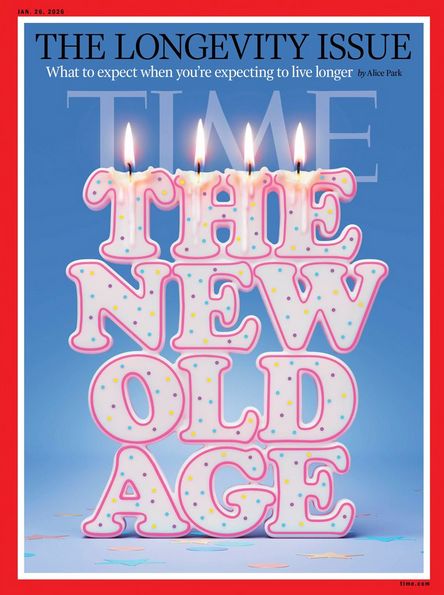
Society isn’t built for aging populations—but that’s beginning to change.
por Time
Life once followed a familiar pattern. You’d go to school, get a job, build a family, and then, sometime in your sixties, retire, enjoying life for a few years until you grew too frail to live on your own. Then you might move in with family or check into a facility where you’d spend your “golden years.”
A crucial part of that blueprint was a universal assumption: that for the majority of people, life would not extend far beyond their 70s. That was based on the average lifespan at the time and underpinned everything. But today, life expectancy in the U.S. stands at 79 years, compared to 68 in 1950. The upshot: 60 million Americans are now aged 65 or older. A similar trend is playing out globally.
It is a sea change—and one that raises big questions about how we both individually and collectively navigate what, in a sense, is our new old age. How, for example, should we spend our extra time? Should employment still be confined to a finite number of years, or instead ebb and flow throughout an entire lifetime? And where, in a world of acute housing shortages, will everyone live?
“We have to re-engineer our society,” says John Rowe, professor of health policy and aging at Columbia University’s Aging Center.
Read the full cover story at the link in bio.
Illustration by Sean Freeman & Eve Steben for TIME
Presented by @tiaa
Fuente: https://www.instagram.com/p/DTc1XocFoJh/?igsh=dTVjYTA5ejVyZDJn